Forks: The Devil's Tableware
Once considered a sign of weakness and vanity, the fork had a long and controversial journey to our dinner tables.

Before you read
3 key words from this story
A Scandalous Tool
Today, we use a fork for almost every meal. It feels natural and necessary. But for most of human history, the fork was seen as a strange and even dangerous object. In the 11th century, when a Byzantine princess brought a golden fork to Italy, people were shocked. They thought it was an insult to God. They believed that fingers were the only proper way to eat, as they were 'divine' tools created by nature.
The Eastern Influence
While Europe was busy eating with their hands, the fork was already common in the Byzantine Empire. It was a tool for the wealthy and the elite. It took hundreds of years for the idea to travel west. Even then, it was mostly used by the very rich. It was seen as a sign of luxury, but also as a sign of being 'soft' or 'unmanly.'
The Eastern Influence While Europe was busy eating with their hands, the fork was already common in the Byzantine Empire.
Changing Manners
As time passed, the way people ate began to change. People started to care more about hygiene and manners. The fork became a way to keep hands clean and to show that you were a civilized person. By the 18th century, the fork had finally become a standard part of the dining table in Europe. It was no longer a tool of the devil, but a symbol of good manners.
The Design Evolution
Have you ever noticed the shape of a fork? The number of tines—the prongs—has changed over time. Early forks often had only two tines. As food styles changed, so did the fork. We needed more tines to pick up different types of food, like peas or pasta. The design we use today is the result of centuries of small improvements to make eating easier and more comfortable.
A Global Standard
Today, the fork is a global standard, but it is not the only way to eat. In many parts of the world, chopsticks or hands are still the preferred method. The history of the fork reminds us that what we consider 'normal' is often just a habit that took a long time to become accepted. Our daily tools have stories that are just as interesting as the food we eat with them.
You're done
You just spent 3 minutes reading in English.
Enjoyed this story?
Tap the heart to let other readers know you enjoyed it.
My notes
Jot down personal reflections while you read — saved so you can review them later.
Check your understanding
4 questions with instant feedback
Let's talk about it
4 questions to spark conversation
Join the conversation
Your English doesn't have to be perfect — your ideas are what matter.
Respond to a question
Or share your reaction
No thoughts yet — be the first to start the discussion.
More from today

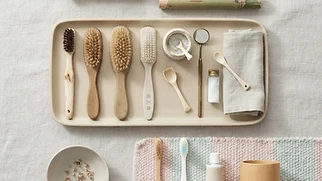
The Toothbrush: From Twigs to Modern Bristles
A look at how humans have maintained dental hygiene throughout history, evolving from simple sticks to the mass-produced tools we use today.


The Economics of Time: Why We Wait
Waiting is not just a waste of time; it is a complex psychological and economic experience that shapes how we value our lives.
🕳️ Want to go deeper?
Keep exploring
How did chopsticks evolve?
Are there other eating tools with religious origins?
Take It With You
A few useful things you picked up
From “Forks: The Devil's Tableware”.
Useful Expressions
vanity
C1 · noun
too much pride in your appearance
“His vanity made him spend hours in front of the mirror.”
Useful for describing personality traits.
hygiene
B2 · noun
the practice of keeping clean to stay healthy
“Good personal hygiene is important for health.”
A very common word in everyday life.
standard
B1 · noun
a level of quality or a normal way of doing things
“The fork is now a standard tool for eating.”
Essential for talking about norms and quality.
Your English
You don’t need to memorise these now. You’ll meet useful language again as you keep reading.
See you tomorrow.
View your collection