The Air Conditioner: A Machine That Changed Geography
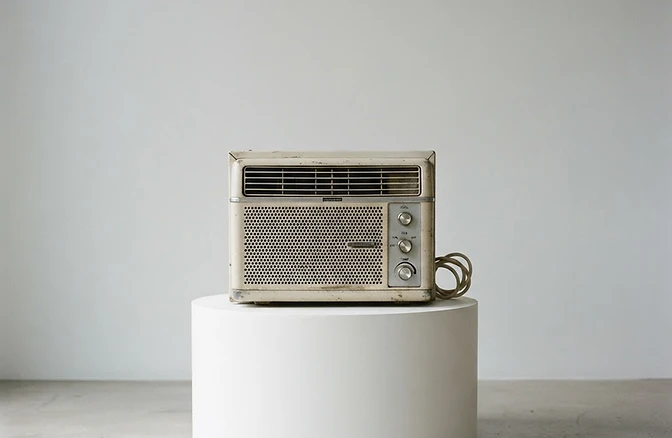
Before the invention of modern cooling, entire regions of the world were considered too hot for major industrial or political centers.
Before you read
3 key words from this story
Highlight a sentence, leave a note
Select any sentence in the story to share what you think. Your notes appear right on the text, so your classmates can read them, react, and reply — exactly where it matters.
What it looks like
The river carved its path through the valley as the town looked on.
3 notes · click any highlight to read them
A Climate-Controlled Revolution
It is difficult to imagine life in the modern era without the hum of an air conditioner. We take for granted the ability to maintain a comfortable temperature regardless of the weather outside. However, for most of human history, geography dictated our productivity. In regions with extreme heat, the middle of the day was a time for rest, not labor. The invention of mechanical cooling did more than just provide comfort; it fundamentally altered the economic and political map of the world.
The Printing Press Connection
Interestingly, the first modern air conditioning system was not designed for human comfort at all. In 1902, Willis Carrier was tasked with solving a humidity problem at a printing plant in Brooklyn. The paper was expanding and contracting due to the moisture in the air, which made it impossible to align the ink correctly. Carrier’s invention, which cooled the air to control humidity, inadvertently created the blueprint for the modern climate-controlled environment.
The invention of mechanical cooling did more than just provide comfort; it fundamentally altered the economic and political map of the world.
Moving to the Sunbelt
Once the technology was adapted for buildings, it triggered a massive demographic shift. In the United States, for example, the 'Sunbelt'—the southern states known for their sweltering summers—saw a population explosion in the mid-20th century. Before air conditioning, these areas were largely agricultural and sparsely populated. With the ability to cool homes and offices, cities like Phoenix, Houston, and Miami became viable hubs for industry and tourism.
The Cost of Comfort
This shift has come with significant environmental consequences. Our reliance on air conditioning has created a feedback loop: as we build more, we generate more heat, which in turn requires more cooling. Furthermore, the architectural style of our cities has changed. We have moved away from designs that naturally encourage airflow, such as high ceilings and cross-ventilation, in favor of sealed, glass-heavy structures that are entirely dependent on electricity to remain habitable.
A New Way of Living
Today, air conditioning is a defining feature of the modern urban experience. It has allowed us to build massive cities in deserts and tropical climates, effectively decoupling human activity from the constraints of the local climate. While this has undoubtedly increased our comfort and productivity, it has also made us more vulnerable. If the power grid fails during a heatwave, these modern cities become dangerous places to live, highlighting our total dependence on this invisible, humming technology.
You're done
You just spent 3 minutes reading in English.
Enjoyed this story?
Tap the heart to let other readers know you enjoyed it.
My notes
Jot down personal reflections while you read — saved so you can review them later.
Check your understanding
4 questions with instant feedback
Let's talk about it
4 questions to spark conversation
Join the conversation
Your English doesn't have to be perfect — your ideas are what matter.
Respond to a question
Or share your reaction
No thoughts yet — be the first to start the discussion.
More from today


Negativity Bias: Why Our Brains Prioritize the Bad
Humans are evolutionarily hardwired to fixate on negative experiences, a survival mechanism that often backfires in our modern, safer world.


Dreams: The Brain’s Nightly Rehearsal
While scientists still debate the exact purpose of dreaming, new research suggests our nightly visions may be a vital tool for processing memories and practicing social scenarios.
🕳️ Want to go deeper?
Keep exploring
How did people stay cool before air conditioning?
What is the future of sustainable cooling?
Take It With You
A few useful things you picked up
From “The Air Conditioner: A Machine That Changed Geography”.
Useful Expressions
Inadvertently
C1 · adverb
Without intention; accidentally.
“He inadvertently deleted the file while trying to save it.”
Useful for describing unintended consequences.
Sweltering
C1 · adjective
Uncomfortably hot.
“We spent the afternoon in the sweltering heat of the city.”
A vivid way to describe extreme heat.
Decoupling
C2 · verb
Separating two things that were previously connected.
“The company is decoupling its software division from its hardware business.”
Common in economic and social analysis.
Your English
You don’t need to memorise these now. You’ll meet useful language again as you keep reading.
See you tomorrow.
View your collection