The Office Chair: A Design for Movement
The modern office chair was not designed for comfort, but for the specific needs of the industrial and digital age.
Before you read
5 key words from this story
Highlight a sentence, leave a note
Select any sentence in the story to share what you think. Your notes appear right on the text, so your classmates can read them, react, and reply — exactly where it matters.
What it looks like
The river carved its path through the valley as the town looked on.
3 notes · click any highlight to read them
The Evolution of Sitting
For most of human history, sitting was a simple affair—a stool, a bench, or the ground. It wasn't until the rise of the office in the 19th century that the chair became a specialized tool. As workers began spending hours at desks, the need for a chair that could support the body during long periods of focus became clear. The early office chair was a rigid, wooden structure, far from the ergonomic marvels we see today.
The Industrial Shift
With the invention of the typewriter and the growth of large corporations, the office environment changed. Workers needed to reach files, type documents, and communicate with colleagues without leaving their desks. This led to the addition of wheels and swivel mechanisms. These features were not just about comfort; they were about efficiency. The chair became a mobile platform that allowed the worker to interact with their environment more effectively.
The early office chair was a rigid, wooden structure, far from the ergonomic marvels we see today.
The Ergonomic Revolution
By the mid-20th century, designers began to realize that the human body was not meant to be static. Prolonged sitting was causing back pain and fatigue. This sparked the ergonomic revolution. Designers started studying human anatomy to create chairs that could adjust to different heights, angles, and postures. The goal was to support the spine and encourage movement, even while seated.
The Digital Age
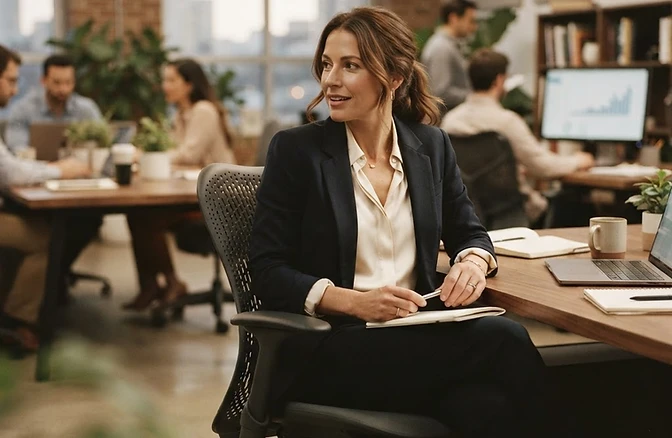
Today, the office chair is a high-tech piece of equipment. With adjustable lumbar support, breathable mesh fabrics, and complex tension controls, it is designed to be an extension of the user. Yet, the fundamental challenge remains: how to keep a body healthy while it is confined to a desk. The chair has evolved from a simple seat to a complex interface between the human body and the digital workspace.
Beyond the Chair
As we move toward more flexible work environments, the office chair is once again changing. Some are experimenting with standing desks, walking pads, and even active seating that forces the body to balance. The history of the office chair is a reminder that our tools are constantly adapting to our needs, and that the way we work is always in flux.
You're done
You just spent 3 minutes reading in English.
Enjoyed this story?
Tap the heart to let other readers know you enjoyed it.
My notes
Jot down personal reflections while you read — saved so you can review them later.
Check your understanding
4 questions with instant feedback
Let's talk about it
4 questions to spark conversation
Join the conversation
Your English doesn't have to be perfect — your ideas are what matter.
Respond to a question
Or share your reaction
No thoughts yet — be the first to start the discussion.
More from today
Glassblowing: The Ancient Breath That Shaped Modernity
A simple experiment with a metal tube in the first century BCE transformed glass from a luxury item into an essential tool for human civilization.


Lipstick: A History of Power and Rebellion
Once a symbol of status and later a tool for political protest, lipstick has a surprisingly complex social history.
🕳️ Want to go deeper?
Keep exploring
What are the health risks of sitting for too long?
How did the invention of the computer change office furniture design?
Take It With You
A few useful things you picked up
From “The Office Chair: A Design for Movement”.
Useful Expressions
rigid
B2 · adjective
stiff and not moving or bending
“The old chair was too rigid to be comfortable.”
Useful for describing physical objects and also abstract rules.
ergonomic
C1 · adjective
designed for efficiency and comfort in the working environment
“She bought an ergonomic keyboard to help her wrists.”
A very common term in modern office and health discussions.
static
C1 · adjective
lacking in movement, action, or change
“The company's growth has remained static for years.”
Useful for describing situations that are not changing.
in flux
C1 · idiom
in a state of continuous change
“The schedule is still in flux, so don't book anything yet.”
A natural way to describe things that are currently changing.
Your English
You don’t need to memorise these now. You’ll meet useful language again as you keep reading.
See you tomorrow.
View your collection