The Paper Clip: A Small Wire with a Big History
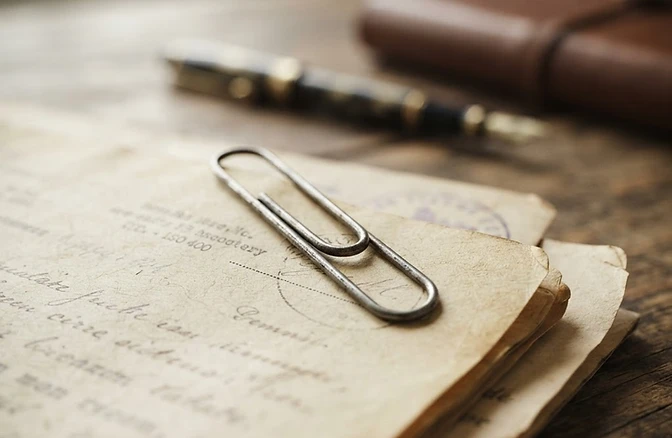
Before the modern paper clip, people used ribbons to hold documents together, but a simple piece of bent wire changed office life forever.
Before you read
3 key words from this story
From Ribbons to Wire
For hundreds of years, keeping papers together was a messy task. From the 13th century until the 1800s, people used strips of waxed ribbon to bind their documents. It was a slow and formal process, often requiring holes to be punched through the pages. Imagine trying to organize a busy office today using only ribbons and wax; it would be nearly impossible to keep up with the speed of modern work.
The Mystery of the Inventor
Many people believe the paper clip was invented by a Norwegian man named Johan Vaaler in 1899. Because Norway did not have patent laws at the time, he registered his design in Germany. However, the story is more complicated than that. Long before Vaaler, other inventors were experimenting with metal fasteners. In 1867, Samuel Fay patented a 'Ticket Fastener' that could also hold papers, though it looked nothing like the clips we use today.
Imagine trying to organize a busy office today using only ribbons and wax; it would be nearly impossible to keep up with the speed of modern work.
The Gem Design
If you look at a standard paper clip, you are likely looking at the 'Gem' design. This specific shape—the double oval loop—was not actually created by Vaaler. It was produced by the Gem Manufacturing Ltd. in England. While Vaaler is often celebrated as a national hero in Norway, the Gem clip became the global standard because its design was more flexible and easier to use than earlier, stiffer versions.
A Tool for More Than Paper
Beyond the office, the paper clip has had a surprising life. It has been used as a makeshift tool for everything from resetting electronic devices to picking simple locks. During World War II, it even became a symbol of resistance in some occupied countries, where people wore them on their clothes to show unity. It is a perfect example of how a simple piece of factory scrap can become a global icon of design.
Why It Still Matters
Today, we take the paper clip for granted, but it represents a major shift in how we handle information. It turned a complex, time-consuming task into a one-second action. The next time you reach for a clip to hold your notes together, remember that you are using a piece of engineering that took centuries of trial and error to perfect.
You're done
You just spent 3 minutes reading in English.
Enjoyed this story?
Tap the heart to let other readers know you enjoyed it.
My notes
Jot down personal reflections while you read — saved so you can review them later.
Check your understanding
4 questions with instant feedback
Let's talk about it
4 questions to spark conversation
Join the conversation
Your English doesn't have to be perfect — your ideas are what matter.
Respond to a question
Or share your reaction
No thoughts yet — be the first to start the discussion.
More from today

Urban Moss: The City's Quiet Cleaner
Tiny plants growing on city walls are doing a massive job by cleaning the air we breathe.

Play-Doh: A Cleaning Tool That Became a Toy
The famous colorful clay for children was originally created to clean coal soot from wallpaper.
🕳️ Want to go deeper?
Keep exploring
What other office supplies have interesting origin stories?
How did the invention of the stapler change office efficiency?
Take It With You
A few useful things you picked up
From “The Paper Clip: A Small Wire with a Big History”.
Useful Expressions
ubiquitous
C1 · adjective
found everywhere
“Smartphones have become ubiquitous in modern society.”
Useful for describing common modern objects.
makeshift
B2 · adjective
used as a temporary substitute
“We used a belt as a makeshift rope.”
Commonly used in everyday problem-solving contexts.
take for granted
B2 · idiom
to not appreciate something because it is always there
“We often take clean water for granted.”
Essential for expressing thoughts on daily life.
Your English
You don’t need to memorise these now. You’ll meet useful language again as you keep reading.
See you tomorrow.
View your collection