The Salted Path: How Ancient Trade Routes Shaped Our World
An exploration of how the ancient trade of salt created the first global networks and influenced the development of modern civilization.
Before you read
3 key words from this story
The White Gold
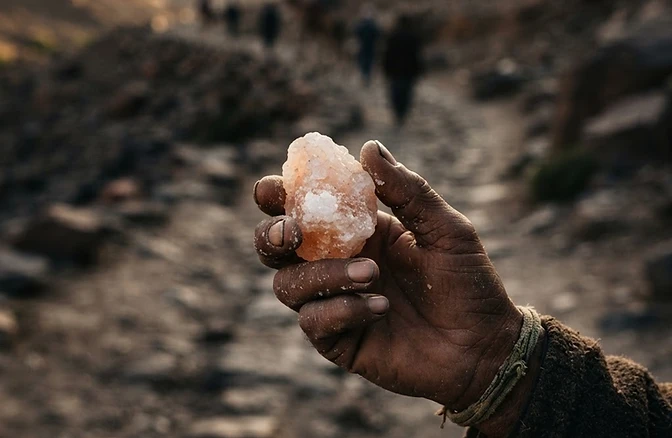
Before the age of oil or gold, there was salt. In the ancient world, salt was not merely a seasoning; it was a vital preservative, a currency, and a strategic resource. Without refrigeration, salt was the only way to keep meat and fish edible for long periods, making it essential for survival and military campaigns. It was so valuable that Roman soldiers were sometimes paid in salt, a practice that gave us the word 'salary.'
The First Global Networks
Because salt deposits were not evenly distributed across the globe, the need for this mineral forced early civilizations to establish trade routes. These paths, which stretched across deserts and mountains, became the arteries of the ancient world. They were not just for salt; they were the channels through which ideas, religions, and technologies flowed. The 'Salt Roads' were the precursors to the Silk Road, connecting distant cultures and fostering the first true era of globalization.
' The First Global Networks Because salt deposits were not evenly distributed across the globe, the need for this mineral forced early civilizations to establish trade routes.
Power and Control
Control over salt mines and trade routes was synonymous with political power. Empires rose and fell based on their ability to secure and tax this essential commodity. Governments realized early on that because everyone needed salt, it was the perfect target for taxation. The 'salt tax' became a common tool for state revenue, often leading to social unrest and even revolution. The history of salt is, in many ways, the history of the state's reach into the lives of its citizens.
A Legacy of Connection
Today, salt is cheap and abundant, but its legacy remains etched into our geography. Many of the world's great cities were founded near salt deposits or along the ancient routes that carried it. The infrastructure of our modern world—our roads, our borders, and our economic systems—can often be traced back to these early, desperate quests for a simple mineral. We are living in a world built on the foundations of the salt trade, a reminder that even the most mundane items can shape the course of human history.
You're done
You just spent 3 minutes reading in English.
Enjoyed this story?
Tap the heart to let other readers know you enjoyed it.
My notes
Jot down personal reflections while you read — saved so you can review them later.
Check your understanding
4 questions with instant feedback
Let's talk about it
4 questions to spark conversation
Join the conversation
Your English doesn't have to be perfect — your ideas are what matter.
Respond to a question
Or share your reaction
No thoughts yet — be the first to start the discussion.
More from today


The Architecture of the Nap: Why We Need a Midday Reset
A look at the biological and cultural history of the siesta and why modern society's rejection of the midday rest might be a mistake.


Stop Apologizing So Much
An exploration of the psychology behind over-apologizing and how it affects our perceived authority and self-worth.
🕳️ Want to go deeper?
Keep exploring
What other items have served as currency throughout history?
How did the Silk Road change the world?
Take It With You
A few useful things you picked up
From “The Salted Path: How Ancient Trade Routes Shaped Our World”.
Useful Expressions
Commodity
C1 · noun
A raw material or primary agricultural product that can be bought and sold.
“Oil is a major global commodity.”
Essential for understanding trade and economics.
Synonymous
C1 · adjective
Closely associated with something.
“For many, the brand is synonymous with quality.”
A very common way to describe strong associations.
Mundane
C1 · adjective
Lacking interest or excitement; dull.
“He found the work to be quite mundane.”
A great word for describing everyday, boring things.
Your English
You don’t need to memorise these now. You’ll meet useful language again as you keep reading.
See you tomorrow.
View your collection