The Secret Life of the Left-Handed
Left-handed people have navigated a world designed for the right-handed for centuries, leading to unique adaptations and surprising evolutionary theories.

Before you read
4 key words from this story
Highlight a sentence, leave a note
Select any sentence in the story to share what you think. Your notes appear right on the text, so your classmates can read them, react, and reply — exactly where it matters.
What it looks like
The river carved its path through the valley as the town looked on.
3 notes · click any highlight to read them
A World Built for the Right
If you are right-handed, you probably never think about the design of your world. Scissors, notebooks, and even computer mice are made with you in mind. But for the ten percent of the population who are left-handed, everyday life is a constant, subtle challenge. From the way doors open to the layout of a kitchen, the world is built for the majority. This creates a unique experience for lefties, who must constantly adapt to tools that feel awkward or even difficult to use.
The Evolutionary Puzzle
Scientists have long wondered why left-handedness exists at all. If the majority of humans are right-handed, why hasn't the trait disappeared? Some researchers suggest that being left-handed provides a 'fighting advantage' in sports or combat. Because lefties are rare, opponents are less used to facing them. This surprise factor might have helped our ancestors survive in competitive environments, keeping the trait alive in our DNA over thousands of years.
This creates a unique experience for lefties, who must constantly adapt to tools that feel awkward or even difficult to use.
Brain Connections
For a long time, people believed that left-handed people were simply 'backwards' or that their brains worked in a mirror image of right-handers. Modern science shows it is much more complex. While right-handers usually process language in the left side of the brain, many left-handers have a more distributed system. This doesn't make them smarter or less smart, but it does mean their brains are often more flexible when it comes to processing information and recovering from injuries.
A History of Stigma
Historically, being left-handed was often viewed with suspicion. In many languages, the word for 'left' is linked to negative ideas. In Latin, the word 'sinister' means left, which eventually evolved to mean evil or dangerous. Children were often forced to write with their right hands in schools, a practice that caused significant stress and confusion. Thankfully, these outdated ideas have largely faded, and left-handedness is now recognized as a natural variation of human biology.
Embracing the Difference
Today, being left-handed is no longer a social barrier. In fact, many people celebrate it as a unique part of their identity. While the world still favors the right, the rise of specialized products and a better understanding of neurodiversity have made life much easier. Whether it is a creative advantage or just a quirk of nature, the left-handed experience remains a fascinating example of how human diversity persists despite a world designed for the majority.
You're done
You just spent 3 minutes reading in English.
Enjoyed this story?
Tap the heart to let other readers know you enjoyed it.
My notes
Jot down personal reflections while you read — saved so you can review them later.
Check your understanding
4 questions with instant feedback
Let's talk about it
4 questions to spark conversation
Join the conversation
Your English doesn't have to be perfect — your ideas are what matter.
Respond to a question
Or share your reaction
No thoughts yet — be the first to start the discussion.
More from today

Tea: The Leaf That Changed the World
From a legendary discovery in ancient China to a global daily ritual, tea has shaped trade, politics, and social habits for thousands of years.

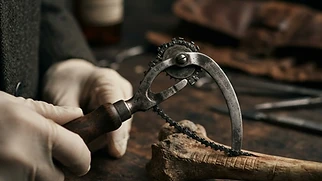
Chainsaws Were Originally Medical Tools
The powerful tool we now use to cut down trees was first created by doctors to help with difficult childbirths.
🕳️ Want to go deeper?
Keep exploring
Are there other physical traits that were once considered 'bad'?
Do left-handed people have different creative abilities?
Take It With You
A few useful things you picked up
From “The Secret Life of the Left-Handed”.
Useful Expressions
Majority
B1 · noun
The greater number of people or things.
“The majority of the class voted to go to the park.”
Essential for discussing statistics and social groups.
Adapt
B1 · verb
To change your behavior or ideas to fit a new situation.
“It takes time to adapt to a new job.”
A very common verb for describing life changes.
Trait
B2 · noun
A particular quality in your personality or physical appearance.
“His best trait is his kindness.”
Useful for talking about genetics and personality.
Stigma
C1 · noun
A strong feeling of disapproval that most people in a society have about something.
“There is still a stigma around mental health in some places.”
Important for discussing social history and culture.
Your English
You don’t need to memorise these now. You’ll meet useful language again as you keep reading.
See you tomorrow.
View your collection