The Silent Language of Architecture: How Buildings Shape Our Mood
The spaces we inhabit do more than just shelter us; they actively influence our mental state and social interactions.
Before you read
3 key words from this story
The Invisible Influence
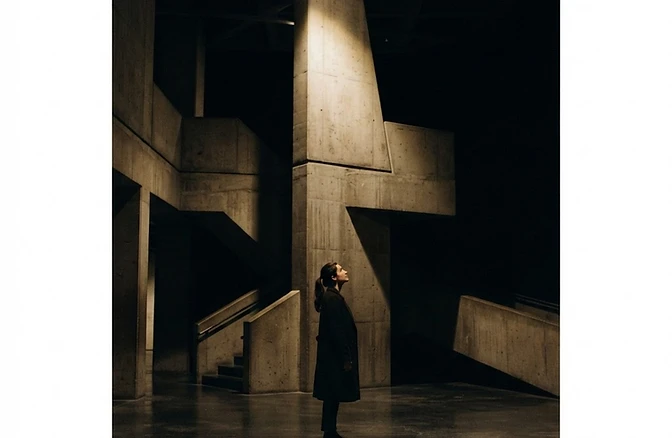
We often think of buildings as static structures, mere containers for our lives. However, architects and psychologists argue that our environment is a silent participant in our daily experiences. The height of a ceiling, the amount of natural light, and the flow of a room can subtly shift our mood, productivity, and even our willingness to talk to strangers. We are constantly reacting to the geometry of our surroundings.
The Psychology of Space
Consider the difference between a cramped, dark office and a bright, open-plan workspace. The former might make us feel restricted and anxious, while the latter can encourage collaboration but also lead to sensory overload. Research suggests that high ceilings can promote creative thinking, while smaller, enclosed spaces often help us focus on detailed tasks. Our brains are hardwired to interpret these spatial cues as signals for how we should behave.
The Psychology of Space Consider the difference between a cramped, dark office and a bright, open-plan workspace.
Designing for Connection
Urban planners are increasingly looking at how to design cities that foster community. The 'third place' concept—spaces that are neither home nor work—is vital for social health. When a building or a public square is designed with wide paths and comfortable seating, it invites people to linger. Conversely, harsh lighting and narrow corridors can make us feel like we are just passing through, discouraging any sense of belonging.
The Future of Living
As we spend more time indoors, the importance of 'biophilic design'—bringing nature into our buildings—has grown. Adding plants, water features, or natural wood textures can lower stress levels significantly. It turns out that our modern, concrete-heavy world might be missing the very elements that keep us calm. By understanding the psychology of architecture, we can create spaces that don't just house us, but actually help us thrive.
You're done
You just spent 3 minutes reading in English.
Enjoyed this story?
Tap the heart to let other readers know you enjoyed it.
My notes
Jot down personal reflections while you read — saved so you can review them later.
Check your understanding
4 questions with instant feedback
Let's talk about it
4 questions to spark conversation
Join the conversation
Your English doesn't have to be perfect — your ideas are what matter.
Respond to a question
Or share your reaction
No thoughts yet — be the first to start the discussion.
More from today

Perfume: The Ancient Art of Communicating with Gods
Long before it was a luxury accessory, perfume was a sacred tool used by ancient civilizations to bridge the gap between the earthly and the divine.

The Great Emu War: A Military Defeat by Flightless Birds
In 1932, the Australian military declared war on a population of emus, only to find that the birds were surprisingly difficult to defeat.
🕳️ Want to go deeper?
Keep exploring
How do different colors in a room affect our productivity?
What is the history of open-plan offices?
Take It With You
A few useful things you picked up
From “The Silent Language of Architecture: How Buildings Shape Our Mood”.
Useful Expressions
static
C1 · adjective
Lacking in movement, action, or change.
“The building was not just a static structure; it felt alive.”
It is a useful adjective for describing things that do not change.
spatial
C1 · adjective
Relating to space and the position, size, and shape of things in it.
“The architect considered the spatial layout of the room carefully.”
It is a key term in design and psychology discussions.
thrive
B2 · verb
To grow or develop well or vigorously.
“Plants thrive in spaces with plenty of natural light.”
It is a common, positive verb used to describe success and health.
Your English
You don’t need to memorise these now. You’ll meet useful language again as you keep reading.
See you tomorrow.
View your collection