The Spoon: From Seashells to Silverware
Before the polished metal tools in our drawers, humanity relied on nature's own designs to eat.
Before you read
3 key words from this story
Highlight a sentence, leave a note
Select any sentence in the story to share what you think. Your notes appear right on the text, so your classmates can read them, react, and reply — exactly where it matters.
What it looks like
The river carved its path through the valley as the town looked on.
3 notes · click any highlight to read them
The First Scoops
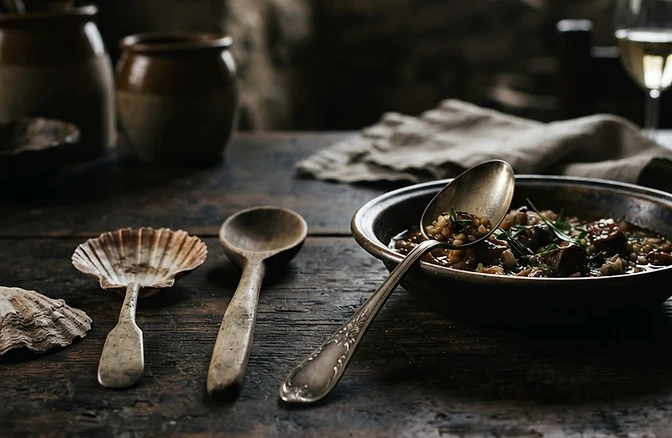
Long before the invention of modern cutlery, early humans faced a simple problem: how to consume liquids and soft foods without making a mess. The solution was not found in a factory, but in the natural world. Prehistoric people looked around their environment and found the perfect tools already waiting for them. Seashells, curved pieces of wood, and even hollowed-out animal horns served as the very first spoons.
A Natural Evolution
These early implements were not just functional; they were essential for survival. As human societies developed, the need for more durable tools grew. People began to shape wood and bone into more consistent, ergonomic forms. This transition from found objects to crafted tools marked a significant step in human ingenuity. It was a slow, steady process of refinement that lasted for thousands of years.
A Natural Evolution These early implements were not just functional; they were essential for survival.
The Rise of Metal
By the 14th century, the spoon began to take on the familiar shape we recognize today. As metalworking techniques improved, spoons were crafted from bronze, silver, and eventually steel. These were no longer just for the poor or the nomadic; they became status symbols. A well-made spoon was a sign of a household's prosperity and refinement, often passed down through generations as a valuable heirloom.
A Classic in Your Drawer
Today, we rarely think about the history of the spoon. It is a constant, quiet companion in our daily lives. Yet, every time you stir your coffee or eat a bowl of soup, you are using a tool that has undergone a massive transformation. From a simple seashell found on a beach to the mass-produced stainless steel items in your kitchen, the spoon remains one of the most important inventions in human history.
You're done
You just spent 3 minutes reading in English.
Enjoyed this story?
Tap the heart to let other readers know you enjoyed it.
My notes
Jot down personal reflections while you read — saved so you can review them later.
Check your understanding
4 questions with instant feedback
Let's talk about it
4 questions to spark conversation
Join the conversation
Your English doesn't have to be perfect — your ideas are what matter.
Respond to a question
Or share your reaction
No thoughts yet — be the first to start the discussion.
More from today

Perfume: The Ancient Art of Communicating with Gods
Long before it was a luxury accessory, perfume was a sacred tool used by ancient civilizations to bridge the gap between the earthly and the divine.
The Great Emu War: A Military Defeat by Flightless Birds
In 1932, the Australian military declared war on a population of emus, only to find that the birds were surprisingly difficult to defeat.
🕳️ Want to go deeper?
Keep exploring
How did other eating utensils like knives and forks evolve?
Are there cultures that still use natural materials for eating today?
Take It With You
A few useful things you picked up
From “The Spoon: From Seashells to Silverware”.
Useful Expressions
implement
C1 · noun
A tool or instrument used for a particular purpose.
“The spoon is a simple but effective eating implement.”
It is a precise word for tools that learners often encounter in formal or historical contexts.
ingenuity
C1 · noun
The quality of being clever, original, and inventive.
“The ingenuity of early humans allowed them to create tools from nature.”
It is a useful, high-level noun for describing human creativity.
heirloom
C2 · noun
A valuable object that has belonged to a family for several generations.
“She kept her grandmother's silver spoon as a family heirloom.”
It is a culturally significant word often used in discussions about history and family.
Your English
You don’t need to memorise these now. You’ll meet useful language again as you keep reading.
See you tomorrow.
View your collection