The Supermarket Layout: A Map for Your Wallet
Retail designers use psychology to make you spend more time and money in the store.
Before you read
6 key words from this story
Highlight a sentence, leave a note
Select any sentence in the story to share what you think. Your notes appear right on the text, so your classmates can read them, react, and reply — exactly where it matters.
What it looks like
The river carved its path through the valley as the town looked on.
3 notes · click any highlight to read them
The Hidden Path
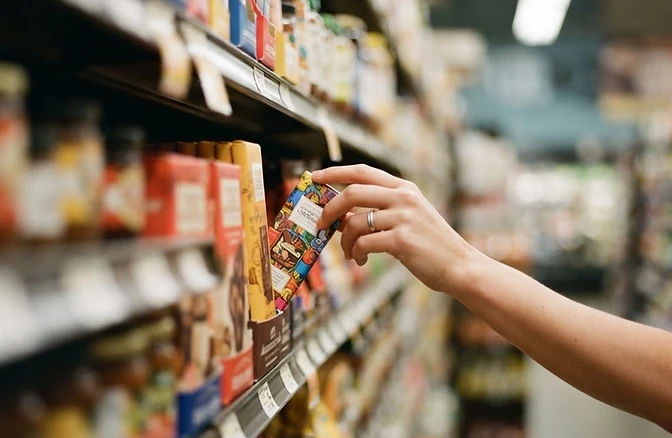
Have you ever noticed that supermarkets are almost always designed the same way? You walk in, and you are immediately greeted by colorful fruits and vegetables. Then, you head toward the back for milk, bread, or eggs—the essentials. To get these, you have to walk past dozens of aisles filled with snacks, sodas, and cleaning products. This is not a coincidence; it is a carefully planned strategy.
The Power of Freshness
The "produce-first" layout is a classic retail trick. By putting fresh, vibrant fruits and vegetables at the entrance, the store wants you to feel healthy and good about your shopping trip. Studies suggest that when we start our shopping with healthy choices, we feel "licensed" to treat ourselves to something less healthy later on. It is a psychological warm-up that puts you in a positive mood for spending.
Studies suggest that when we start our shopping with healthy choices, we feel "licensed" to treat ourselves to something less healthy later on.
The Essential Hunt
Supermarkets put staples—like milk, bread, and eggs—at the very back of the store for a simple reason. If you could grab these items near the entrance, you would be in and out in five minutes. By forcing you to walk the full length of the store, the designers increase the chances that you will see something else you need—or think you need—along the way. Every extra step you take increases your potential basket size.
Targeted Distractions
While you are looking for your milk, you are surrounded by "impulse buy" items. These are often placed at eye level, which is known in the industry as "buy level." High-margin products (items that make the store the most profit) are placed right where your eyes naturally land. Meanwhile, cheaper alternatives are often hidden on the bottom shelves where they are harder to see.
A Designer's Game
Understanding this layout helps you become a smarter shopper. Next time you go to the store, try to notice the "hidden" path you are taking. You might find that you walk out with a few items that were not on your list. Being aware of the store’s design is the first step toward keeping control of your budget.
You're done
You just spent 3 minutes reading in English.
Enjoyed this story?
Tap the heart to let other readers know you enjoyed it.
My notes
Jot down personal reflections while you read — saved so you can review them later.
Check your understanding
4 questions with instant feedback
Let's talk about it
4 questions to spark conversation
Join the conversation
Your English doesn't have to be perfect — your ideas are what matter.
Respond to a question
Or share your reaction
No thoughts yet — be the first to start the discussion.
More from today

The Library of Babel: A Digital Infinite
An online project recreates a fictional library containing every possible combination of letters, effectively holding all knowledge and nonsense.
Cheese: A Happy Accident in a Bag
Long ago, a traveler discovered that milk stored in an animal stomach turned into something delicious and solid.
🕳️ Want to go deeper?
Keep exploring
How do online stores use similar layouts to keep you clicking?
Do different countries design their supermarkets differently?
Take It With You
A few useful things you picked up
From “The Supermarket Layout: A Map for Your Wallet”.
Useful Expressions
Essential
B1 · noun
Something that is necessary or needed.
“Milk and bread are essentials.”
Commonly used to describe basic needs.
Coincidence
B2 · noun
When two things happen at the same time by chance.
“It is not a coincidence that they both wore the same shirt.”
Useful for explaining unexpected events.
Layout
B2 · noun
The way in which the parts of something are arranged.
“I like the layout of this new apartment.”
Essential for describing spaces and designs.
Impulse buy
B2 · noun phrase
A thing that you buy suddenly without planning.
“Those chocolates at the counter were an impulse buy.”
A very common term in consumer culture.
Your English
You don’t need to memorise these now. You’ll meet useful language again as you keep reading.
See you tomorrow.
View your collection