The Urban Forager: Finding Nature in the Concrete Jungle
Urban foraging is transforming how city dwellers interact with their environment, turning neglected patches of green into sources of food and connection.
Before you read
4 key words from this story
A New Perspective on the City
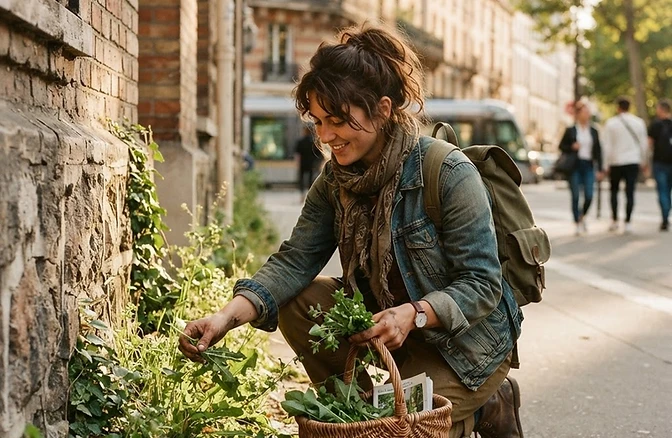
For most people, a city is a landscape of concrete, glass, and steel. However, for the urban forager, it is a hidden pantry. Urban foraging—the practice of identifying and harvesting edible plants, fruits, and herbs growing in public or neglected spaces—is gaining popularity as a way to reconnect with the natural world in the heart of the metropolis.
The Ethics of the Harvest
Foraging in a city comes with unique challenges and responsibilities. Unlike foraging in a remote forest, urban environments require careful consideration of soil quality and pollution. Experienced foragers emphasize the importance of 'foraging etiquette': never taking more than you need, avoiding areas treated with chemicals, and ensuring that you are not harvesting from private property or protected habitats.
A New Perspective on the City For most people, a city is a landscape of concrete, glass, and steel.
More Than Just Food
Beyond the nutritional value, urban foraging is a social activity. It encourages people to slow down and observe their surroundings. When you start looking for wild garlic or elderberries in a city park, you begin to notice the seasonal changes that are often ignored in the rush of daily life. It turns a walk to the office into a treasure hunt, fostering a deeper sense of place and belonging.
The Community Connection
Many urban foraging groups have emerged, creating communities where knowledge is shared. These groups often map out edible plants in their neighborhoods, turning the city into a collaborative project. This shared knowledge helps to demystify the urban landscape, showing that nature is not something that exists only 'out there' in the countryside, but is present in the cracks of the sidewalk and the corners of our parks.
A Sustainable Future
As cities continue to grow, the integration of edible landscapes could become a key part of urban planning. By planting fruit trees instead of purely ornamental ones, cities could provide free, healthy food to their residents. Urban foraging is a small but significant step toward a more sustainable and connected way of living, reminding us that even in the most artificial environments, nature finds a way to thrive.
You're done
You just spent 3 minutes reading in English.
Enjoyed this story?
Tap the heart to let other readers know you enjoyed it.
My notes
Jot down personal reflections while you read — saved so you can review them later.
Check your understanding
4 questions with instant feedback
Let's talk about it
4 questions to spark conversation
Join the conversation
Your English doesn't have to be perfect — your ideas are what matter.
Respond to a question
Or share your reaction
No thoughts yet — be the first to start the discussion.
More from today


The Nocturnal Rehearsal: Understanding Why We Dream
While science has yet to find a single definitive answer, current research suggests dreaming is a vital process for memory consolidation and emotional regulation.


The Silent Language of the Crowd: How We Move Together
Human movement in crowded spaces follows complex, unspoken rules that allow us to navigate dense environments without constant collision.
🕳️ Want to go deeper?
Keep exploring
What are the legal implications of foraging in public spaces?
How can urban gardening improve mental health?
Take It With You
A few useful things you picked up
From “The Urban Forager: Finding Nature in the Concrete Jungle”.
Useful Expressions
metropolis
C1 · noun
a very large and busy city
“The metropolis was alive with lights and noise.”
A sophisticated alternative to 'big city'.
etiquette
C1 · noun
the customary code of polite behavior in society
“There is a certain etiquette to follow when visiting someone's home.”
Useful for discussing social norms.
fostering
C1 · verb
encouraging or promoting the development of something
“The teacher is fostering a love of reading in her students.”
A strong verb for describing positive growth.
demystify
C1 · verb
to make something easier to understand
“This book helps to demystify the complex world of finance.”
Great for explaining the process of making complex things simple.
Your English
You don’t need to memorise these now. You’ll meet useful language again as you keep reading.
See you tomorrow.
View your collection