Ancient Cousins Buried Their Dead
New research suggests that a small-brained human relative was capable of complex behavior.
Before you read
3 key words from this story
A Surprising Discovery
For a long time, scientists thought that only humans with big brains could do complex things. They thought that burying the dead or making symbols was something only 'smart' species did. But a new discovery is changing everything we know about our history.
Meet Homo Naledi
Scientists found a species called Homo naledi in a cave in South Africa. This species lived about 300,000 years ago. They walked on two legs, just like us. But their brains were very small—only one-third the size of a modern human brain.
But their brains were very small—only one-third the size of a modern human brain.
Signs of Culture
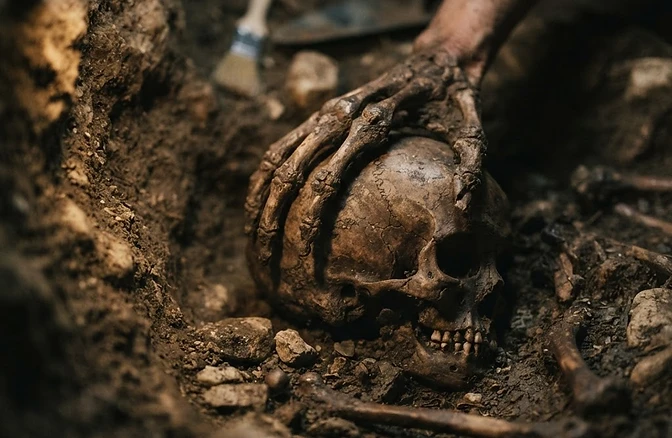
Researchers found that these creatures might have buried their dead in the cave. They also found carvings on the cave walls. These are signs of complex behavior. Usually, we think that only creatures with large brains can think about death or create art. This discovery shows that we might be wrong.
What This Means
This discovery is very important. It means that intelligence is not just about the size of the brain. It means that our ancient cousins had feelings and thoughts that we did not expect. They were not just simple animals. They had a life that was more complex than we thought.
The Mystery Continues
There is still a lot to learn. Scientists are still studying the fossils and the cave. Every new discovery helps us understand where we came from. It reminds us that the history of life is full of surprises and that we are part of a much larger family.
You're done
You just spent 3 minutes reading in English.
Enjoyed this story?
Tap the heart to let other readers know you enjoyed it.
My notes
Jot down personal reflections while you read — saved so you can review them later.
Check your understanding
4 questions with instant feedback
Let's talk about it
4 questions to spark conversation
Join the conversation
Your English doesn't have to be perfect — your ideas are what matter.
Respond to a question
Or share your reaction
No thoughts yet — be the first to start the discussion.
More from today


Candles on a Birthday Cake: A Greek Offering
The tradition of placing candles on birthday cakes began as a way to honor the goddess Artemis with light.

The Rocking Chair: A Cradle for Adults
Originally designed to help mothers soothe their babies, the rocking chair became a beloved piece of furniture for everyone.
🕳️ Want to go deeper?
Keep exploring
What other species are in the human family tree?
How do scientists know how old fossils are?
Take It With You
A few useful things you picked up
From “Ancient Cousins Buried Their Dead”.
Useful Expressions
Species
B1 · noun
A group of animals or plants that are similar.
“Humans are a species.”
Important for science and biology.
Fossil
B2 · noun
The hard remains of an animal or plant from a long time ago.
“They found a dinosaur fossil.”
Key word for history and science.
Complex
B1 · adjective
Not simple; having many parts.
“The problem is very complex.”
Useful for describing difficult ideas.
Your English
You don’t need to memorise these now. You’ll meet useful language again as you keep reading.
See you tomorrow.
View your collection