Resistentialism: The Theory That Objects Hate You
Have you ever felt like your printer or furniture is actively trying to ruin your day? You might be experiencing 'resistentialism'.

Before you read
4 key words from this story
The Malice of Things
We have all had those days. You are in a hurry, but your keys are missing. You try to print a document, but the machine stops working for no reason. You walk past a table, and your toe hits the corner. It feels like these objects are doing this on purpose. It feels like they are angry at you.
A Funny Theory
In the 1940s, a writer named Paul Jennings gave this feeling a name. He called it 'resistentialism'. It is a play on the word 'existentialism'. He joked that inanimate objects have a secret desire to make our lives difficult. He suggested that things are not just passive; they are actively working against us.
A Funny Theory In the 1940s, a writer named Paul Jennings gave this feeling a name.
Why We Feel This Way
Of course, tables and printers do not have feelings. They do not have plans. So why does it feel so real? Our brains are wired to find patterns. When something bad happens, we want to blame someone or something. It is easier to blame a 'spiteful' printer than to admit we forgot to check the paper tray.
The Psychology of Frustration
This feeling is a mix of stress and bad luck. When we are already stressed, small problems feel like big attacks. We project our own feelings onto the world around us. We give the object a personality. We say, 'This chair is mean,' instead of saying, 'I was not looking where I was going.'
A Lighthearted View
Resistentialism is a funny way to look at the world. It helps us laugh at our own bad luck. Next time you stub your toe, you can blame the furniture. Just remember that it is all in your head. The world is not actually out to get you, even if it feels like it is.
You're done
You just spent 3 minutes reading in English.
Enjoyed this story?
Tap the heart to let other readers know you enjoyed it.
My notes
Jot down personal reflections while you read — saved so you can review them later.
Check your understanding
4 questions with instant feedback
Let's talk about it
4 questions to spark conversation
Join the conversation
Your English doesn't have to be perfect — your ideas are what matter.
Respond to a question
Or share your reaction
No thoughts yet — be the first to start the discussion.
More from today

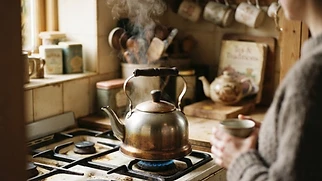
The Kettle: A Vessel for Civilization
From ancient Mesopotamia to the modern kitchen, the humble kettle has been essential for making water safe to drink.


Neurons Playing Games: The Future of Computing
Scientists have successfully taught a dish of living neurons to play the classic video game Doom.
🕳️ Want to go deeper?
Keep exploring
Why do we name our cars and computers?
The history of the word 'existentialism'.
Take It With You
A few useful things you picked up
From “Resistentialism: The Theory That Objects Hate You”.
Useful Expressions
Inanimate
B2 · adjective
Not alive; not a living thing.
“A rock is an inanimate object.”
Essential for understanding the core concept of the article.
Stub
B1 · verb
To hit your toe against something by accident.
“I stubbed my toe on the table leg.”
A very common everyday action that learners often need to describe.
Spiteful
B2 · adjective
Wanting to hurt or annoy someone.
“He was being spiteful when he hid my keys.”
Useful for describing human behavior and the 'personality' of objects.
Wired
B2 · adjective
Naturally designed or programmed to do something.
“Humans are wired to look for food.”
A common way to talk about human psychology and biology.
Your English
You don’t need to memorise these now. You’ll meet useful language again as you keep reading.
See you tomorrow.
View your collection