The Kettle: A Vessel for Civilization
From ancient Mesopotamia to the modern kitchen, the humble kettle has been essential for making water safe to drink.
Before you read
3 key words from this story
The Ancient Origins of Boiling
Long before we had electric kettles that turn off automatically, humans had to find ways to make water safe. In ancient Mesopotamia, people used simple metal containers to boil water over open fires. This was not just about making tea; it was a matter of survival. Boiling water killed dangerous bacteria, allowing early civilizations to grow in places where clean water was hard to find.
The Chinese Iron Revolution
As time passed, the design of the kettle improved significantly. In China, iron kettles became the standard tool for boiling water. These were heavy, durable, and held heat for a long time. By using iron, people could boil water more efficiently, which became a central part of daily life and social rituals. The kettle was no longer just a tool; it was a symbol of a stable home.
The Chinese Iron Revolution As time passed, the design of the kettle improved significantly.
From Fire to Electricity
For centuries, the kettle stayed mostly the same. It sat on a stove, waiting for the water to bubble. Then, the industrial age brought the electric kettle. This changed everything. Suddenly, you did not need a fire or a gas stove to get hot water. You just needed a plug. This invention made hot drinks like tea and coffee accessible to everyone, regardless of their living situation.
A Global Kitchen Staple
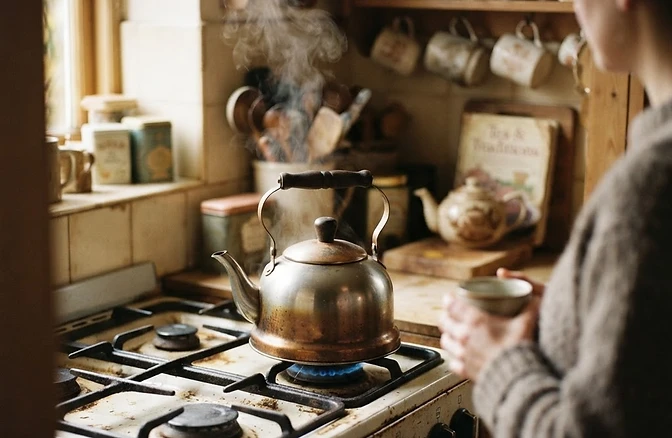
Today, the kettle is one of the most common objects in kitchens around the world. Whether it is a simple stovetop model or a high-tech electric version with temperature controls, its purpose remains the same. It is a bridge between raw nature and human comfort. Every time you boil water, you are participating in a tradition that is thousands of years old.
Why We Still Need the Kettle
Even with modern technology, the kettle remains a vital part of our lives. It is simple, reliable, and does one job perfectly. In a world of complex gadgets, there is something satisfying about a device that has not changed its core purpose in millennia. It reminds us that sometimes, the best technology is the kind that simply keeps us healthy and warm.
You're done
You just spent 3 minutes reading in English.
Enjoyed this story?
Tap the heart to let other readers know you enjoyed it.
My notes
Jot down personal reflections while you read — saved so you can review them later.
Check your understanding
4 questions with instant feedback
Let's talk about it
4 questions to spark conversation
Join the conversation
Your English doesn't have to be perfect — your ideas are what matter.
Respond to a question
Or share your reaction
No thoughts yet — be the first to start the discussion.
More from today


Neurons Playing Games: The Future of Computing
Scientists have successfully taught a dish of living neurons to play the classic video game Doom.


The Solar Eclipse: A Moment of Global Wonder
A solar eclipse is more than just a dark sky; it is a rare event that brings people together to look up.
🕳️ Want to go deeper?
Keep exploring
How did the invention of tea change global trade?
What are the most common kitchen inventions of the last century?
Take It With You
A few useful things you picked up
From “The Kettle: A Vessel for Civilization”.
Useful Expressions
vessel
B2 · noun
A container used for holding liquids.
“The kettle is a metal vessel for boiling water.”
It is a precise word for containers that learners often encounter in history or science.
durable
B2 · adjective
Able to last a long time without breaking.
“Iron kettles were very durable.”
Useful for describing the quality of everyday objects.
staple
B2 · noun
A basic or important item that is used frequently.
“Tea is a staple in many cultures.”
Commonly used to describe food and household items.
Your English
You don’t need to memorise these now. You’ll meet useful language again as you keep reading.
See you tomorrow.
View your collection