The Barcode: A Simple Pattern That Changed Everything
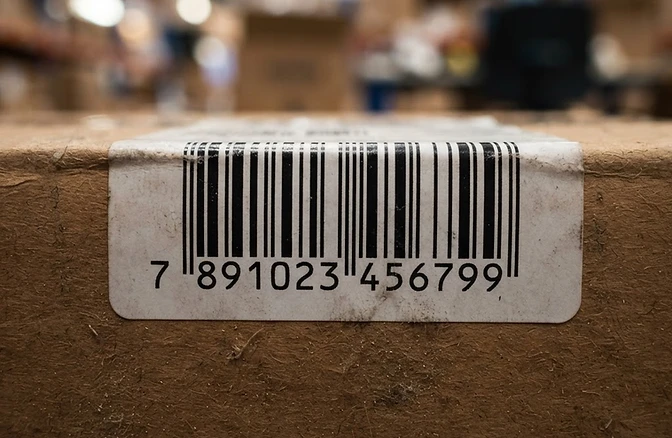
Before the barcode, shopping was slow and manual; this simple invention transformed global trade.
Before you read
4 key words from this story
The Problem of Slow Checkout
In the mid-20th century, grocery shopping was a slow process. Every item had to be manually priced, and the cashier had to type the price of each item into the register. This led to long lines and many mistakes. Store owners were desperate for a way to speed up the process and keep better track of their inventory. They needed a system that was fast, accurate, and easy to use.
The Inspiration from Nature
The idea for the barcode came from a surprising place: the beach. An inventor named Norman Joseph Woodland was drawing lines in the sand, thinking about the dots and dashes of Morse code. He realized that if he extended those lines, he could create a code that a machine could read. He used a flashlight to test his idea, and it worked. The barcode was born from a simple moment of observation.
The Inspiration from Nature The idea for the barcode came from a surprising place: the beach.
A Slow Start
Even though the idea was brilliant, it took a long time to become a reality. The technology to read the codes did not exist yet. It wasn't until the 1970s that lasers became cheap and reliable enough to be used in grocery stores. The first item ever scanned was a pack of chewing gum in 1974. It was a small moment, but it changed the way the world does business forever.
The Global Impact
Today, barcodes are everywhere. They are on almost every product we buy, from food to electronics. They allow stores to track exactly what is selling and when they need to order more. This has made global supply chains much more efficient. We can now buy products from all over the world because the barcode makes it easy to manage the flow of goods.
Beyond the Grocery Store
Barcodes have moved far beyond the grocery store. They are used in hospitals to track patients, in airports to manage luggage, and in libraries to organize books. They are a perfect example of how a simple, elegant solution can solve a massive, complex problem. The next time you hear that 'beep' at the checkout, remember that it is the sound of a revolution in efficiency.
You're done
You just spent 3 minutes reading in English.
Enjoyed this story?
Tap the heart to let other readers know you enjoyed it.
My notes
Jot down personal reflections while you read — saved so you can review them later.
Check your understanding
4 questions with instant feedback
Let's talk about it
4 questions to spark conversation
Join the conversation
Your English doesn't have to be perfect — your ideas are what matter.
Respond to a question
Or share your reaction
No thoughts yet — be the first to start the discussion.
More from today
The First Vending Machine Dispensed Holy Water
Long before modern snacks and sodas, an ancient Greek inventor created a machine to automate the distribution of holy water in temples.


Fingerprints: More Than Just a Crime-Solving Tool
While we use them to unlock phones and catch criminals, fingerprints likely evolved for a much more practical, biological reason.
🕳️ Want to go deeper?
Keep exploring
How do QR codes differ from traditional barcodes?
What other inventions were inspired by nature?
Take It With You
A few useful things you picked up
From “The Barcode: A Simple Pattern That Changed Everything”.
Useful Expressions
inventory
B2 · noun
a complete list of items or stock held by a business
“The store manager is checking the inventory to see what we need to order.”
Essential for understanding business and retail.
accurate
B2 · adjective
correct and without any mistakes
“The clock is very accurate and never loses time.”
Useful for describing data and information.
efficient
B2 · adjective
working well and not wasting time or energy
“The new system is much more efficient than the old one.”
Commonly used in work and technology contexts.
elegant
B2 · adjective
simple and clever in design
“The solution to the problem was very elegant.”
Good for describing smart solutions or designs.
Your English
You don’t need to memorise these now. You’ll meet useful language again as you keep reading.
See you tomorrow.
View your collection