The Dunning-Kruger Effect: Why We Think We Are Better Than We Are
An exploration of the cognitive bias where people with limited knowledge overestimate their own competence.

Before you read
3 key words from this story
Highlight a sentence, leave a note
Select any sentence in the story to share what you think. Your notes appear right on the text, so your classmates can read them, react, and reply — exactly where it matters.
What it looks like
The river carved its path through the valley as the town looked on.
3 notes · click any highlight to read them
The Confidence Gap
Have you ever met someone who was completely wrong about a topic but spoke with total confidence? It is a frustrating experience, but it is also a well-documented psychological phenomenon. This is known as the Dunning-Kruger Effect. It describes a situation where people with low ability in a specific area overestimate their own competence. Essentially, they do not know enough to realize how much they do not know.
The Origin of the Idea
This concept was named after social psychologists David Dunning and Justin Kruger. They were inspired by a bizarre true story from 1995: a man robbed a bank after covering his face in lemon juice. He believed that because lemon juice is used as invisible ink, it would make his face invisible to security cameras. He was clearly wrong, but his confidence was absolute. Dunning and Kruger realized that his lack of skill prevented him from accurately judging his own plan.
The Origin of the Idea This concept was named after social psychologists David Dunning and Justin Kruger.
The Paradox of Expertise
Interestingly, the effect works in both directions. While unskilled people often overestimate their abilities, highly skilled people often underestimate theirs. Because experts understand the complexity of a subject, they assume that if they find it difficult, others must find it easy too. They often suffer from 'imposter syndrome,' feeling that their knowledge is not as special as it actually is.
Learning to See the Truth
So, how do we avoid falling into this trap? The key is to remain curious and open to feedback. When we learn more about a subject, we move from the 'peak of confidence'—where we think we know everything—down into the 'valley of despair,' where we realize how much we have left to learn. This is a healthy part of the learning process. By accepting that we are not experts, we actually open the door to becoming better at whatever we do.
You're done
You just spent 3 minutes reading in English.
Enjoyed this story?
Tap the heart to let other readers know you enjoyed it.
My notes
Jot down personal reflections while you read — saved so you can review them later.
Check your understanding
4 questions with instant feedback
Let's talk about it
4 questions to spark conversation
Join the conversation
Your English doesn't have to be perfect — your ideas are what matter.
Respond to a question
Or share your reaction
No thoughts yet — be the first to start the discussion.
More from today

The Parasol: A Status Symbol That Defied the Sun
Long before they were tools for rainy days, umbrellas were elite accessories designed to shield the powerful from the sun's harsh rays.

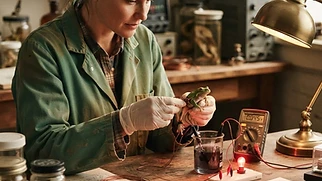
The Frog Battery: A Shocking Experiment
In the 18th century, a simple experiment with frog legs sparked a scientific revolution that led to our modern understanding of electricity.
🕳️ Want to go deeper?
Keep exploring
What is imposter syndrome and how does it differ from the Dunning-Kruger effect?
How does social media influence our perception of our own intelligence?
Take It With You
A few useful things you picked up
From “The Dunning-Kruger Effect: Why We Think We Are Better Than We Are”.
Useful Expressions
competence
C1 · noun
the ability to do something successfully or efficiently
“She showed great competence in her new role.”
A professional term for skill and ability.
overestimate
B2 · verb
to think that something is better or more important than it really is
“Don't overestimate how much time you have.”
Essential for discussing judgment and bias.
phenomenon
B2 · noun
a fact or situation that is observed to exist or happen
“The northern lights are a beautiful natural phenomenon.”
Useful for describing interesting events or behaviors.
Your English
You don’t need to memorise these now. You’ll meet useful language again as you keep reading.
See you tomorrow.
View your collection