The Hayfever Hat: A Lesson in Failure
The 'Hayfever Hat' is a classic example of Chindogu, the Japanese art of creating inventions that solve one problem while creating several others.

Before you read
3 key words from this story
The Problem with Perfection
We are often told that the best inventions are those that solve problems efficiently. We want gadgets that make our lives easier, faster, and more comfortable. But what happens when an invention solves a problem in the most inconvenient way possible? Enter the world of Chindogu, a Japanese philosophy that celebrates the 'un-useless' invention.
What is Chindogu?
Chindogu is the art of creating gadgets that are technically functional but practically useless. The goal is not to sell a product, but to make people laugh and think about the nature of innovation. A true Chindogu invention must be something that you could actually use, but you would never want to because it is just too embarrassing or impractical.
Chindogu is the art of creating gadgets that are technically functional but practically useless.
The Hayfever Hat
One of the most famous examples is the Hayfever Hat. Imagine suffering from terrible allergies. You need a constant supply of tissues to blow your nose. The Hayfever Hat solves this by attaching a full roll of toilet paper to a frame on your head, with the paper hanging down right in front of your face. It is always there when you need it, but you look ridiculous wearing it.
Why We Need Useless Things
Why would anyone spend time designing such things? Chindogu is a critique of our obsession with efficiency. We live in a world where every gadget must be 'smart' or 'optimized.' Chindogu reminds us that it is okay to be silly. It encourages us to look at our daily problems from a different, more playful perspective. It turns the act of invention into a form of performance art.
The Value of the Absurd
While you will never see the Hayfever Hat in a store, it has a lasting impact on how we view technology. It teaches us that not every problem needs a high-tech solution. Sometimes, the best way to deal with a frustration is to laugh at it. By embracing the absurd, we can find a bit of joy in the small, annoying parts of our daily lives.
You're done
You just spent 3 minutes reading in English.
Enjoyed this story?
Tap the heart to let other readers know you enjoyed it.
My notes
Jot down personal reflections while you read — saved so you can review them later.
Check your understanding
4 questions with instant feedback
Let's talk about it
4 questions to spark conversation
Join the conversation
Your English doesn't have to be perfect — your ideas are what matter.
Respond to a question
Or share your reaction
No thoughts yet — be the first to start the discussion.
More from today


Negativity Bias: Why Our Brains Prioritize the Bad
Humans are evolutionarily hardwired to fixate on negative experiences, a survival mechanism that often backfires in our modern, safer world.

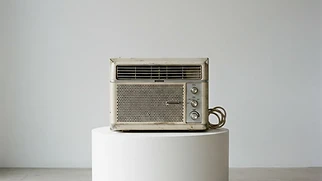
The Air Conditioner: A Machine That Changed Geography
Before the invention of modern cooling, entire regions of the world were considered too hot for major industrial or political centers.
🕳️ Want to go deeper?
Keep exploring
What are other examples of Chindogu inventions?
How does humor influence the design process?
Take It With You
A few useful things you picked up
From “The Hayfever Hat: A Lesson in Failure”.
Useful Expressions
impractical
B2 · adjective
not easy or sensible to use in real life
“Wearing high heels to hike is very impractical.”
Useful for describing things that don't work well.
absurd
C1 · adjective
completely ridiculous or illogical
“The idea that the moon is made of cheese is absurd.”
Great for describing funny or strange situations.
critique
C1 · noun
a detailed analysis or assessment of something
“The book is a critique of modern consumer culture.”
Useful for academic or thoughtful discussions.
Your English
You don’t need to memorise these now. You’ll meet useful language again as you keep reading.
See you tomorrow.
View your collection