The Lunchbox: From Mining Pits to Schoolyards
The humble lunchbox has evolved from a rugged tool for industrial workers into a cultural icon of childhood.
Before you read
4 key words from this story
The Industrial Origins of the Lunchbox
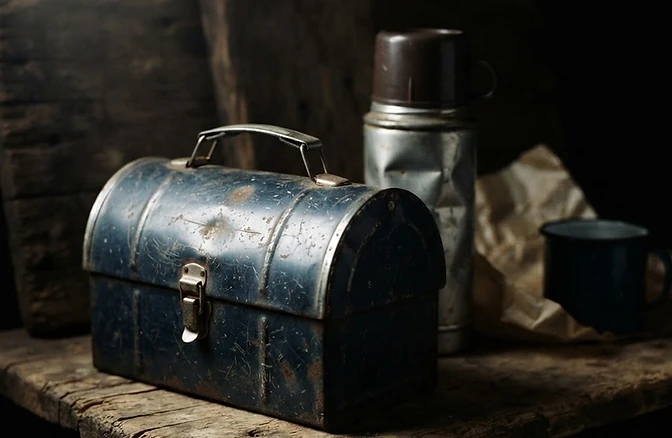
Before the plastic containers and insulated bags we recognize today, the lunchbox was a strictly utilitarian necessity for the working class. In the late 19th century, miners and factory workers needed a way to transport their meals to harsh, soot-filled environments. They often repurposed sturdy metal tins, such as those used for tobacco or biscuits, to protect their food from the grime of the workplace. These early containers were not designed for aesthetics; they were built to survive the physical demands of the industrial age.
The Rise of the Metal Icon
By the mid-20th century, the lunchbox underwent a dramatic transformation. As the American middle class expanded, manufacturers realized that the lunchbox could be more than just a container—it could be a canvas. In 1950, Aladdin Industries introduced the first licensed character lunchbox, featuring Hopalong Cassidy. This was a stroke of marketing genius. Suddenly, the lunchbox was no longer just a vessel for a sandwich; it was a status symbol, a way for children to express their interests and social allegiances during the school day.
These early containers were not designed for aesthetics; they were built to survive the physical demands of the industrial age.
The Plastic Revolution
As the decades passed, the heavy, dent-prone metal boxes began to lose their appeal. Parents grew concerned about the sharp edges and the potential for rust, while manufacturers sought cheaper, more versatile materials. The transition to plastic in the 1980s and 90s marked the end of the 'golden age' of the metal lunchbox. While plastic offered better insulation and lighter weight, many collectors still pine for the clatter and character of the vintage metal tins that defined a generation of school lunches.
A Cultural Artifact
Today, the lunchbox serves as a fascinating lens through which we can view changing social norms. It reflects our evolving relationship with food, convenience, and consumer culture. From the rugged, repurposed tins of the Victorian era to the highly branded, insulated bags of the modern day, the lunchbox has always been a reflection of the society that carries it. It remains a small, portable piece of our daily identity, holding not just our sustenance, but our personal history.
You're done
You just spent 3 minutes reading in English.
Enjoyed this story?
Tap the heart to let other readers know you enjoyed it.
My notes
Jot down personal reflections while you read — saved so you can review them later.
Check your understanding
4 questions with instant feedback
Let's talk about it
4 questions to spark conversation
Join the conversation
Your English doesn't have to be perfect — your ideas are what matter.
Respond to a question
Or share your reaction
No thoughts yet — be the first to start the discussion.
More from today


Negativity Bias: Why Our Brains Prioritize the Bad
Humans are evolutionarily hardwired to fixate on negative experiences, a survival mechanism that often backfires in our modern, safer world.

The Air Conditioner: A Machine That Changed Geography
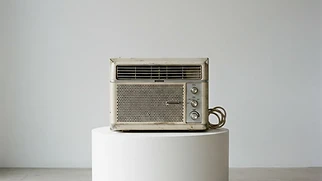
Before the invention of modern cooling, entire regions of the world were considered too hot for major industrial or political centers.
🕳️ Want to go deeper?
Keep exploring
How did the school lunch program change eating habits in the 20th century?
What are the most collectible vintage lunchboxes today?
Take It With You
A few useful things you picked up
From “The Lunchbox: From Mining Pits to Schoolyards”.
Useful Expressions
utilitarian
C1 · adjective
Designed to be useful or practical rather than attractive.
“The office furniture was purely utilitarian, focusing on comfort rather than style.”
Useful for describing functional design.
repurposed
C1 · verb
Adapted for a different use or purpose.
“They repurposed the old factory into a modern art gallery.”
Common in discussions about sustainability and history.
vessel
C2 · noun
A container used for holding liquids or other substances.
“The ancient vessel was found buried in the sand.”
A sophisticated alternative to 'container'.
pine for
C1 · verb
To miss and want something very much.
“He pined for the days when he could travel freely.”
A natural way to express nostalgia.
Your English
You don’t need to memorise these now. You’ll meet useful language again as you keep reading.
See you tomorrow.
View your collection